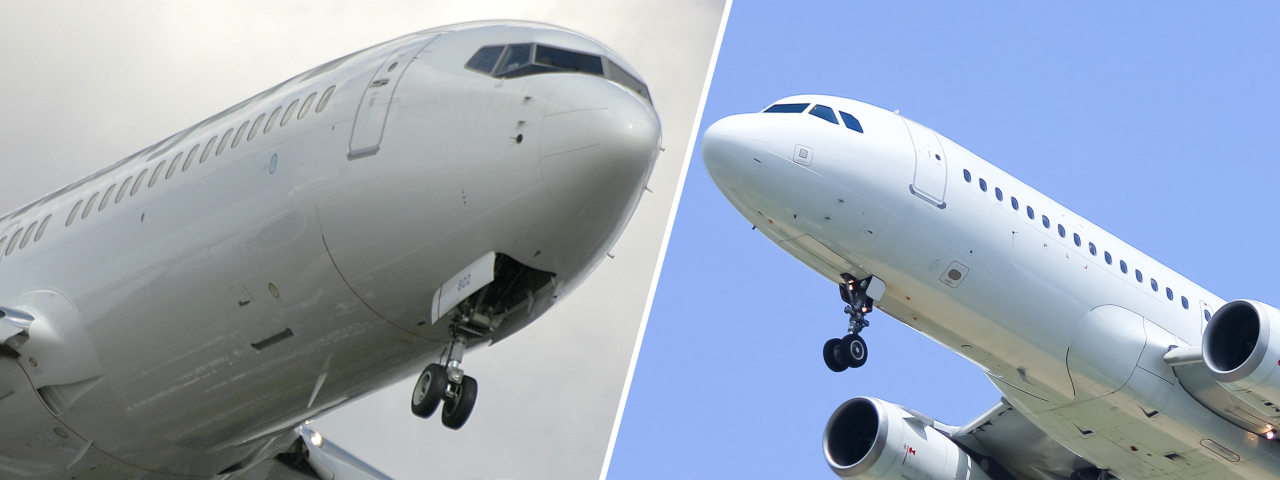
 We compare the Airbus A320-200 and Boeing 737-800 – two single-aisle aircraft, each offering its own advantages for charter clients.


Very Important Planes: Airbus A320-200 and Boeing 737-800
We take a closer look at two of the most widely operated single-aisle aircraft in the world – and the distinct strengths each one brings to charter.
Few pairings in commercial aviation are as enduring as the Airbus A320-200 and the Boeing 737-800. Both icons of short-to-medium haul, both single-aisle stalwarts of airline fleets worldwide, and both, for decades, the trusted choice of operators across every continent.
Factsheet
| Airbus A320-200 | Boeing 737-800 | |
|---|---|---|
| Passenger Capacity | Usually 180 passengers in a single-aisle configuration | Usually 186-189 passengers in a single-aisle configuration |
| Range | Approx. 3,400 nautical miles (6,300 km) | Approx. 3,115 nautical miles (5,765 km) |
| Fuel | Max. fuel capacity of 19,476 kg (42,700 lb) Efficient over longer single-aisle sectors |
Max. fuel capacity of 20,434 kg (45,030 lb) Strong fuel efficiency per seat on high-frequency short sectors |
| Operational altitude | Can fly up to 39,800 ft | Can fly up to 41,000 ft |
| Passenger comfort | Slightly wider fuselage providing a more generous aisle | Efficient single-aisle layout; comparable seat comfort across most of the cabin |
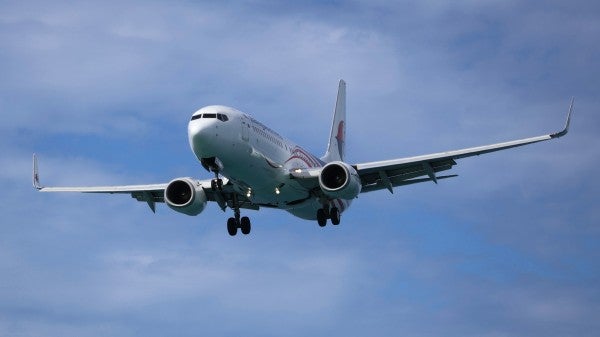
The Airbus A320-200 and Boeing 737-800 reflect two distinct design philosophies. Airbus prioritised automation and flight protections, introducing the side-stick to modernise cockpit design. Boeing retained a more tactile, pilot-led approach rooted in its long-standing 737 lineage. Over time, both strategies have evolved into highly reliable platforms widely used across the industry.
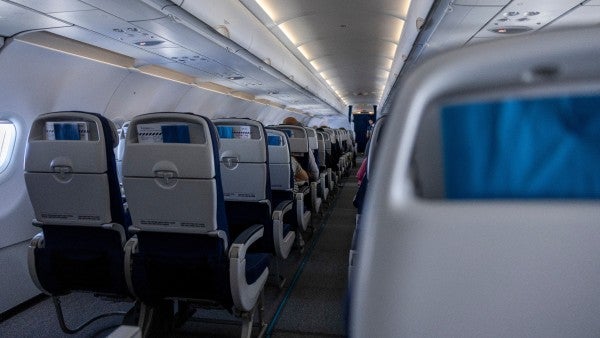
In the cabin, differences are subtle but meaningful. The A320’s slightly wider fuselage allows for a broader aisle, which can ease boarding and movement on high-capacity trips, with the 737-800 offering comparable comfort overall. Passenger experience is broadly similar, with noise levels influenced more by engine type than airframe.
Operationally, the 737-800’s lower ground height makes it well suited to airports with more limited infrastructure, including those without jet bridges. The A320’s higher stance, by contrast, provides greater engine clearance and has supported ongoing upgrades over its lifespan.
Both aircraft deliver strong fleet flexibility. Airbus offers commonality across the A318-A321 range, while Boeing maintains consistency across the 737 family, allowing efficient crew scheduling and reduced training requirements.
In the charter market, the A320-200 and 737-800 sit in the same highly practical category – capable of moving large groups efficiently on routes that don’t require wide-body aircraft. Adaptable and dependable, both continue to serve a wide range of charter needs, from corporate travel to sports and entertainment movements.
Whether you require services involving charter, lease, or outright purchase, ACS, and ACS Aviation Solutions, can assist you with your search; contact us today to discuss your aviation requirements.