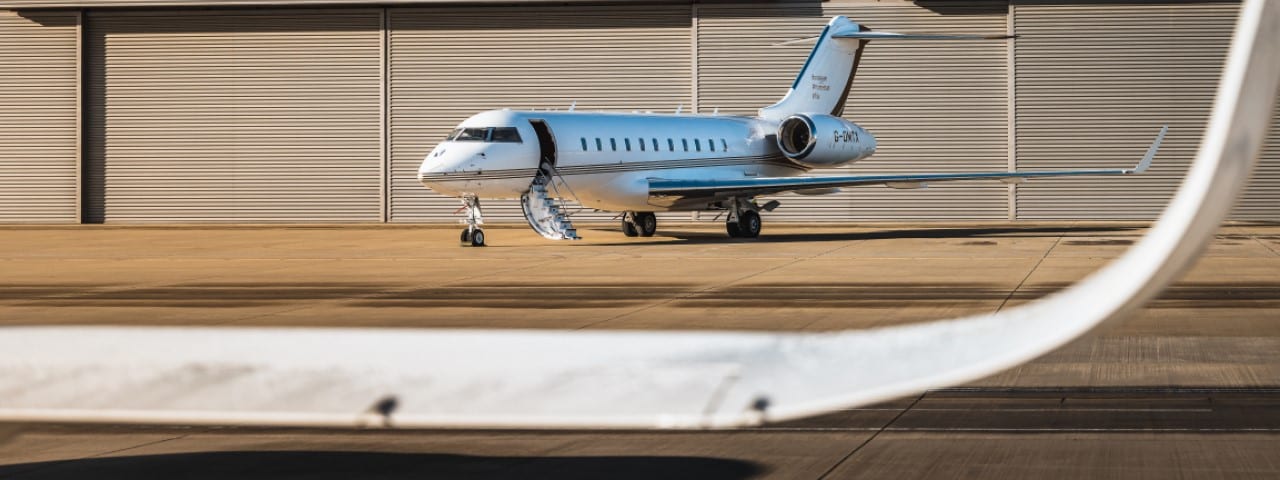
 The fascinating evolution of private aviation is a journey from simple propeller planes in the 1920s to today's luxurious, high-tech aircraft. Key milestones include the launch of the Lockheed JetStar, the rise of manufacturers such as Gulfstream and Learjet, and the transformation of cabin design.


The evolution of private jets
The history of private aviation is a fascinating journey. Beginning in the mid-20th century, the concept of exclusive air travel began to take shape, with private aviation truly accelerating in the 1960s with the emergence of dedicated business aircraft from pioneering manufacturers such as Dassault, Gulfstream and Embraer.
These early models laid the groundwork for the modern era of private jet charter. The industry has since undergone a remarkable transformation, adapting to meet the high standards of today's private aviation market. Read on to discover how it has evolved.
The early years of air travel: 1920–1950
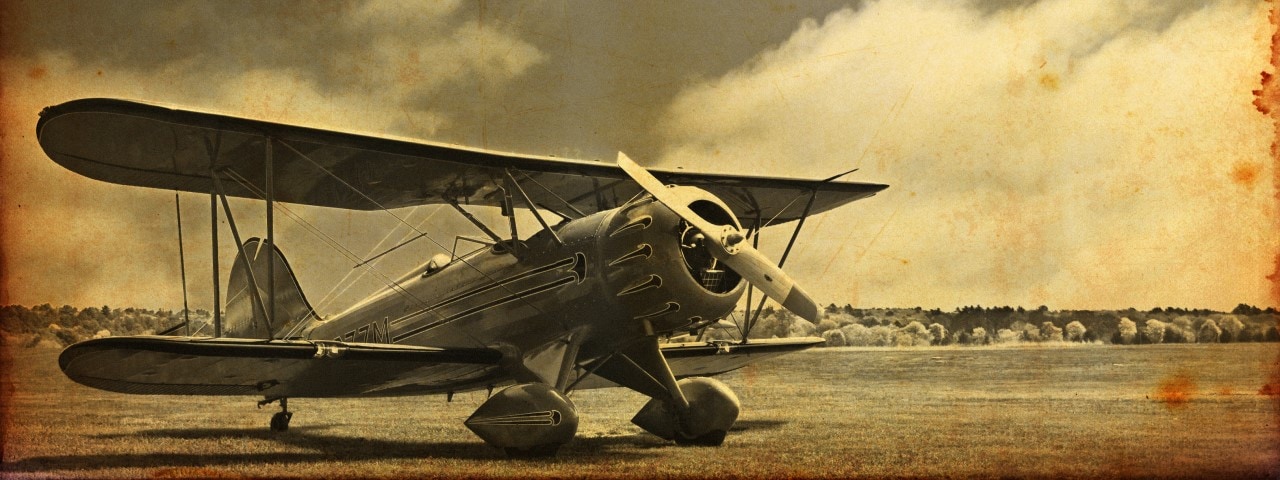
The history of private aviation is deeply intertwined with the development of passenger flight itself. In the early days, flying was a private affair, as the first aircraft, often repurposed from World War I, typically had space for just a pilot and one passenger. These early fliers had to brave the elements, wearing helmets, goggles and warm clothes in open cockpits.
The 1920s saw the arrival of aircraft with enclosed cabins and more seating, marking a significant step towards modern private travel. During this period, wealthy individuals began using private planes to access remote locations or bypass slow road transport over long distances. These propeller planes were the forerunners of modern business travel, setting the stage for the eventual development of the first private jet.
Notable aircraft from this period included:
- The two-seater Piper Cub, which reached speeds of up to 74 knots (85 mph);
- The four-seater Cessna Airmaster, which almost doubled the speed to 132 knots (162 mph);
- The 11-seater Beechcraft Model 18, with its powerful twin 450-horsepower engines, achieved cruising speeds of up to 195 knots (225 mph).
Piper, Cessna and Beechcraft continued to dominate the emerging light plane industry throughout this period and in the years that followed World War II.
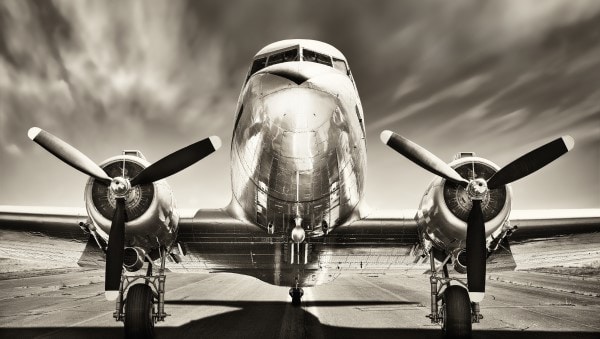
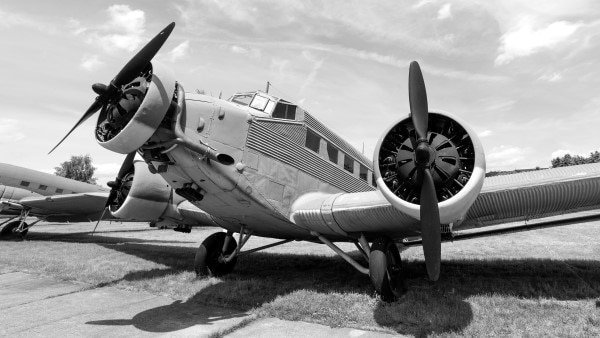
The early 1950s saw the growth of more recognisable features like compact radio communication, navigational equipment that allowed pilots to take off in bad weather, and more luxuriously appointed pressurised cabins. Onboard lavatories also made a relieving appearance during this period.
The private jet takes off: 1950–1980
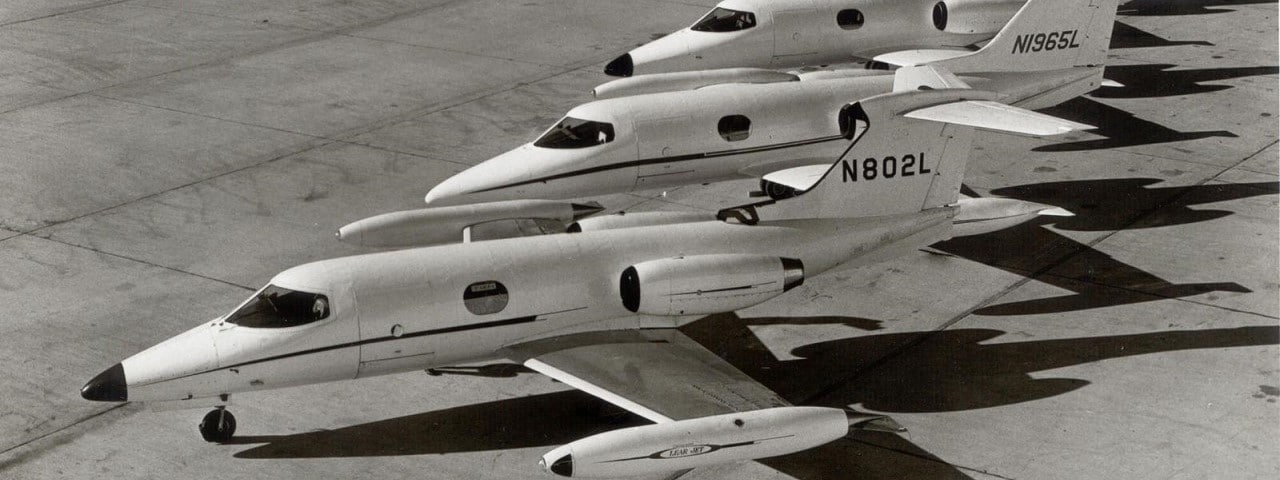
The era of the business jet really commenced when the Lockheed JetStar took off with 10 passengers and two crew on the 4th of September 1957, although it would still take a few years for the private aviation industry to truly take off.
The rise of private jet flights
The decade that followed saw the inaugural journeys of many future legends in the world of private jet flights. These included:
- The IAI Westwind, which began life as the Jet Commander in January 1963;
- The Dassault Falcon 20 took its first flight a few months later in May 1963;
- The revolutionary Learjet 23, which debuted later in October 1963.
This period was also marked by innovation in design. Gulfstream combined speed with long-range capability in its Gulfstream II, while Cessna focused on lighter aircraft with the Citation I.
From practicality to status symbol
Initially, private flight was seen as a practical necessity for wealthy businesspeople needing to travel efficiently. However, this perception began to change.
The private aviation industry found an iconic new champion in 1964 when Frank Sinatra took delivery of his own Learjet 23. The jet became a symbol of glamour and success. When courting actress Mia Farrow, Sinatra offered to fly her to his Palm Springs home for their second date. Farrow was impressed, and less than a year later, the newlywed couple boarded the same aircraft for their honeymoon in the South of France. This high-profile use helped transform private jet flights from a simple mode of transport into a symbol of ultimate luxury and status.
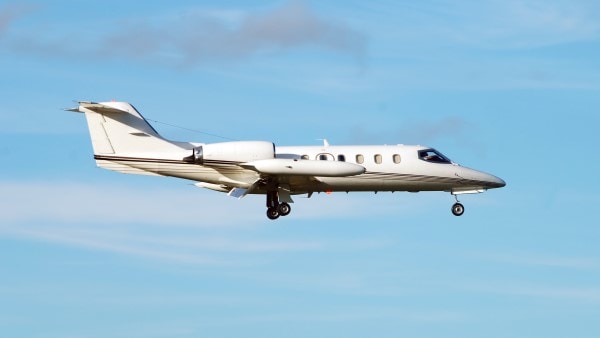
Frank Sinatra was something of a pioneer in the world of private flying. Two years after acquiring his Learjet, he lent it to Elvis Presley, who was eloping with 21-year-old Priscilla Beaulieu. The couple flew from Palm Springs to Las Vegas and back on the same day, demonstrating the unparalleled speed and discretion offered by a private jet for sensitive, time-critical events.
As private jet travel became more fashionable, a heated race began among manufacturers to produce the best aircraft.
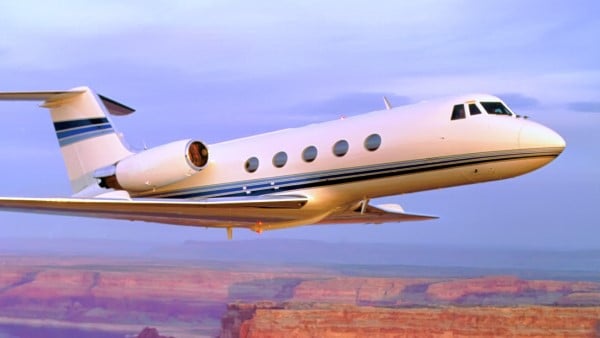
In 1966, Gulfstream shifted the goalposts with the spacious Gulfstream II. Capable of carrying up to 12 passengers and boasting a range of up to 4,000 miles, it offered both size and range, making it ideal for group travel.
Cessna followed in 1971 with the Citation 500. While not as fast as the Learjet, its ease of use made it incredibly popular, and it would go on to become one of the most widely used private aircraft for decades.
This period marked a significant turning point, with manufacturers competing not only on speed but on a range of features, including comfort, capacity and operational simplicity.
The industry takes shape: 1980 to today
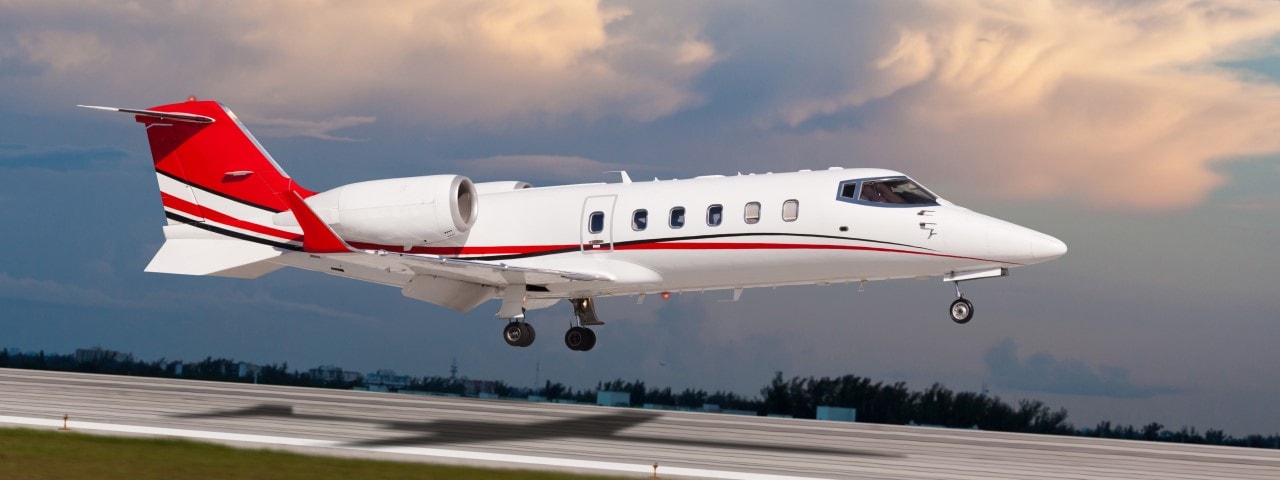
The 1980s were a relatively quiet period for private jet innovation, largely due to various economic factors that forced manufacturers to focus on modifying existing designs rather than investing heavily in new aircraft. However, the 1990s brought an end to this drought with two significant releases: the Learjet 45 in 1995 and the Beechcraft Premier I three years later.
Pioneering private jets of the 21st century
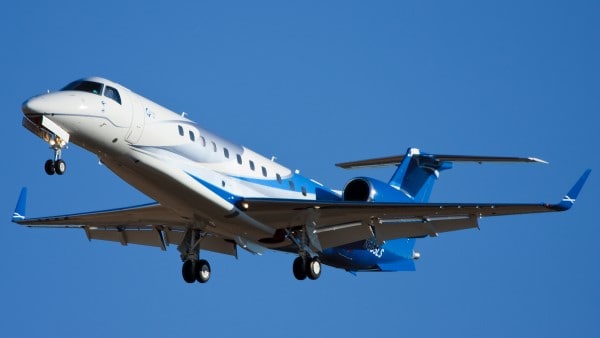
The private aviation industry entered the 21st century with a wave of innovations. Embraer led the way with its Legacy 600 in March 2001. Uniquely, the Brazilian company developed this business jet from its successful family of airliners, a reversal of the typical design process.
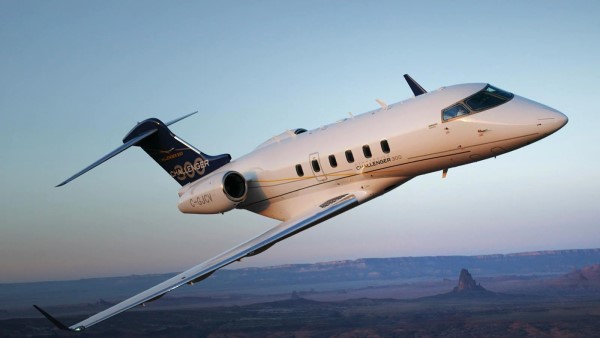
Just months later, in August 2001, the Bombardier Challenger 300, which was previewed at the 1999 Paris Air Show, made its maiden flight. This sophisticated, transcontinental jet became a cornerstone of the super mid-size category and, in many ways, set the standard for modern private jets. Its features included:
- A large, comfortable and exceptionally quiet cabin;
- The ability to use short airfields for take-off and landing;
- A cruising speed of up to 533 knots, even at high altitudes.
These aircraft revolutionised private jet flights, combining comfort, performance and efficiency to meet the evolving demands of the market.
Demand for exclusive air travel has continued to grow, and so has the market. While political instability and the 2007–2008 global financial crash slowed deliveries for about a decade, a number of landmark designs have emerged in recent years.
The new generation of business aircraft
High on the list of these cutting-edge models are the Gulfstream G600 and Gulfstream G750, along with the Embraer Praetor 500/600, the Dassault Falcon 8X and the Bombardier Challenger 750. The legendary Cessna Citation family has also expanded, with the CitationJet CJ4, Citation Hemisphere and Citation Mustang keeping its name alive.
Sadly for Frank Sinatra and fans of his iconic aircraft, Bombardier has announced the end of the Learjet's production. The final model, the Learjet 75, was delivered in 2022, marking the end of an era for a true pioneer in air travel.
What was happening inside?
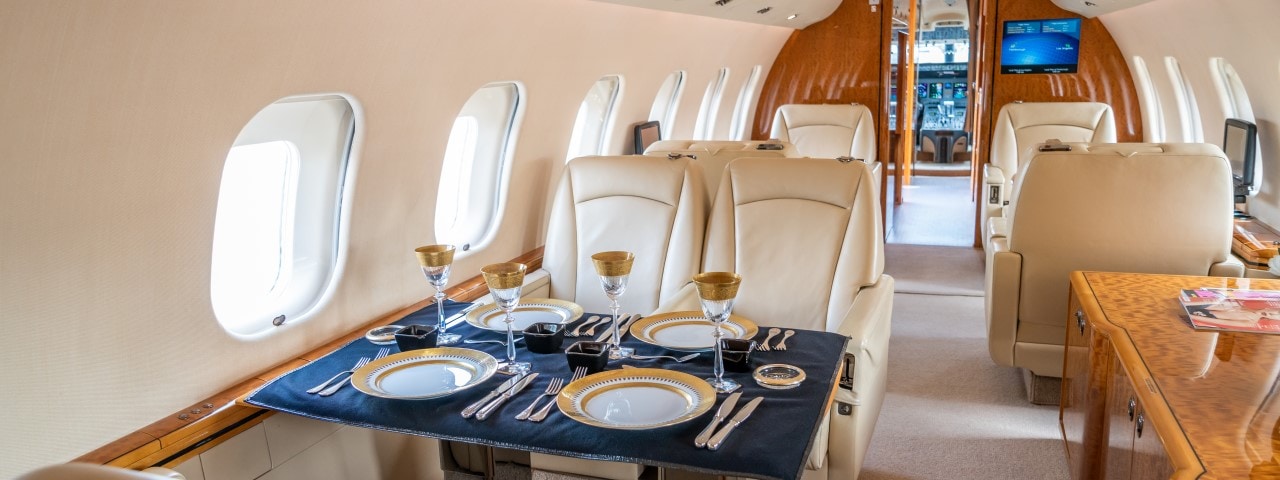
As manufacturers competed to increase cruising speeds and efficiency, the interior of private jets also underwent a dramatic transformation. The days of cramped cabins, like the orange-trimmed Learjet 23 that once carried Mia Farrow, are long gone.
In many ways, the modern private jet cabin design recalls the golden age of air travel in the 1940s, when butlers served tuxedoed passengers on the earliest airliners. While commercial travel has become a more accessible and often less glamorous experience, private jet travel offers a return to that era of luxury and sophistication, now with the added benefits of much greater speed and seamless onboard Wi-Fi.
Embraer's vision for onboard luxury
Leading the charge in this quest for ultimate comfort and luxury is Embraer. Jay Beever, the company's Vice President of Interior Design, articulated his vision for the perfect cabin, stating: "The most important thing today is how to maximise ergonomics and craftsmanship. We call it a 'butler with wings' in that it serves its passengers information without them having to ask. We believe that a perfectly executed cabin should be like hidden zones of lingerie with pops of colour, like the bottom of a Louboutin shoe, or the inside of a Hugo Boss jacket.”
This focus on discreet luxury, personalised comfort and cutting-edge design is defining the future of private jet travel.
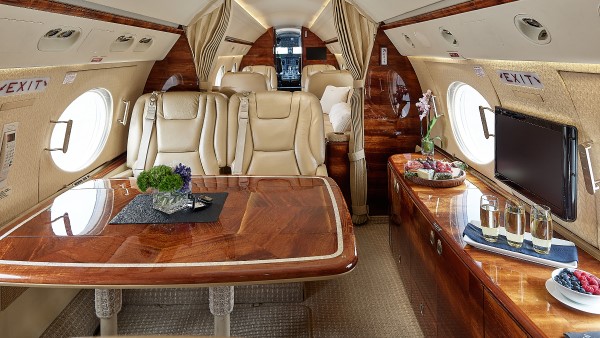
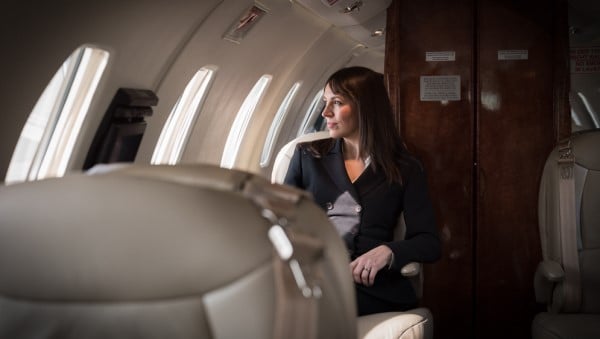
This evolution would have been very much to the taste of Frank Sinatra, who would have undoubtedly appreciated the incredible progress in in-flight entertainment. The journey began with the first in-flight film screening in 1925, a silent film shown on a flight out of London. Today, that has been replaced with personal screens, putting hundreds of films and games at passengers' fingertips. The way we entertain ourselves in the air has undergone as much innovation as the powerful engines that propel the aircraft.
Redefining in-flight entertainment
Modern private jet charter flights continue to raise the bar. They offer Wi-Fi speeds robust enough for live streaming, enabling passengers to stay connected and entertained in real-time. Some cabins are also now so spacious that they can accommodate gym equipment, allowing you to work out while travelling.
Experience today’s top private jets with Air Charter Service (ACS)
To fly on some of the most sophisticated and luxurious private aircraft currently on the market, and experience some of the finest private jet services available today, contact us at ACS to enquire about chartering a private jet.
Or to benefit from the services of a luxury full-service travel agency, speak to our experts at The Travel Division at Air Charter Service.