 From Basel to Bukhara, Athens to Abu Dhabi, a new generation of collectors is reshaping the global art map, travelling by private jet in search of emerging scenes, cultural capital and meaningful encounters.


The collector’s map
From Basel to Bukhara, Athens to Abu Dhabi, a new generation of collectors is reshaping the global art map, travelling by private jet in search of emerging scenes, cultural capital and meaningful encounters.
The global art scene is experiencing a remarkable transformation, evolving into a more dynamic and decentralised landscape. While London, New York and Paris have long been the cultural titans, their influence is now being challenged. New and vibrant hubs, including Seoul, Almaty, Mexico City and Dubai are rising to prominence, not merely by hosting exhibitions but actively shaping critical conversations, nurturing emerging talent and redefining the future of art patronage.
For decades, established fairs such as Art Basel in Switzerland have stood as industry meeting points. Still an undisputed barometer of taste, market confidence and institutional power, their gravitational pull isn’t loosening but expanding beyond a single fair, city or season.
A younger generation of collectors, gallerists and influential YouTube art critics is also reshaping the landscape with a focus on discovery, sustainability and authenticity. Along with other art enthusiasts, they are eager to explore local art scenes, uncover emerging talent and immerse themselves in cities where art intertwines with social and political narratives. As part of this shift, discovering spirited, culturally rich hubs fosters a deeper connection to the art community and champions a future where art reflects the world around us.
The rise of the UAE
When Frieze Abu Dhabi opens in November 2026, it promises to bring a distinctive approach, showcasing new artistic practices, highlighting artist-led projects and providing a stage for the region to connect with the wider art world.
As Simon Fox, CEO of Frieze, notes: “Abu Dhabi’s cultural leadership, underpinned by its world-class museums, institutions and commitment to the arts, provides the foundation for this collaboration. Combined with the reach of Frieze’s global platform, we can amplify the emirate’s achievements while opening new possibilities for discovery, championing artistic practices from the region and shaping the fair as a space for conversation and exchange.”
The Louvre Abu Dhabi, located in the cultural district of Saadiyat Island, is the largest art gallery in the Arabian Peninsula. Designed by French architect Jean Nouvel, it is part of a cultural constellation of international galleries and museums that, as of later this year, will include the Guggenheim Abu Dhabi. Designed by the late Frank Gehry, the Guggenheim’s largest space to date will showcase works by Jean-Michel Basquiat and Jackson Pollock, among others.
Dubai’s prominence on the global art trail continues to grow. In addition to the annual Art World Dubai contemporary art exhibition and Dubai Art Season, which runs from January to April, there’s plenty to see on Alserkal Avenue. This bustling arts quarter houses vast spaces from high-profile international galleries, including Waddington Custot and Efie Gallery, with an emphasis on regional artistic discourse. Meanwhile, 2027 sees the launch of Design Miami/Dubai, a platform spotlighting the best in collectable regional and global design.
The new Silk Road
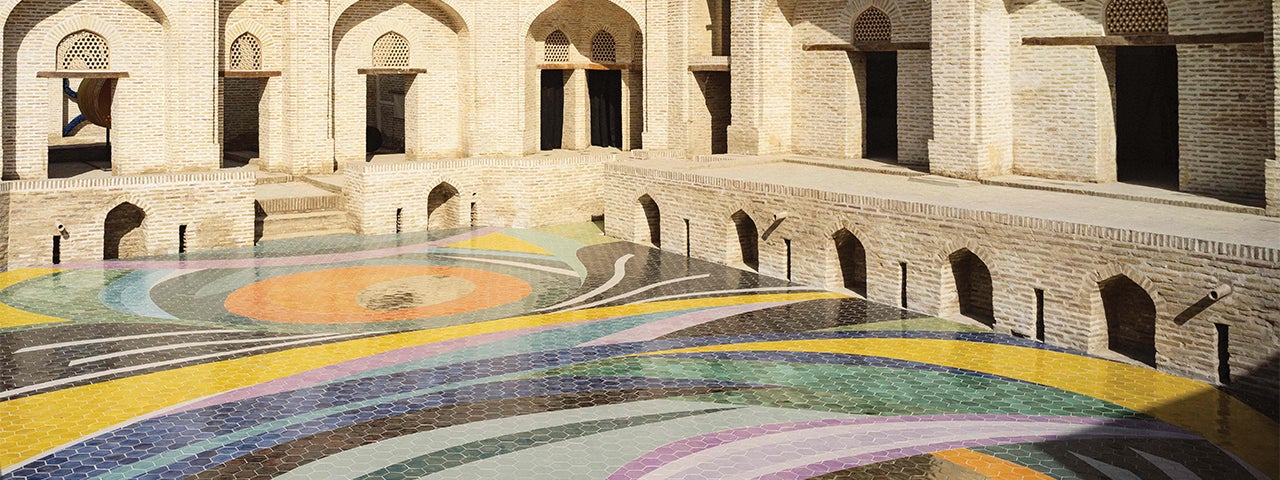
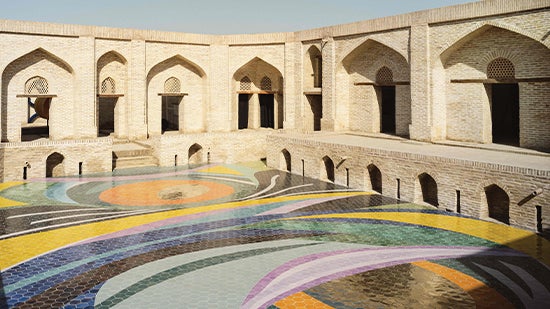
When the Bukhara Biennale debuted in 2025, the sight of international gallerists and collectors milling around the Uzbekistan city of Bukhara must have been a welcome, if not amusing, sight for some locals. But by pairing artists with artisans to embed eye-catching sculptures, murals and other artworks throughout the city’s historic centre, its organisers have put Central Asia’s flourishing art scene firmly on the map. Elsewhere, another major art initiative, the Centre for Contemporary Arts, is set to open in the popular Silk Road tourist stop of Tashkent in March 2026.
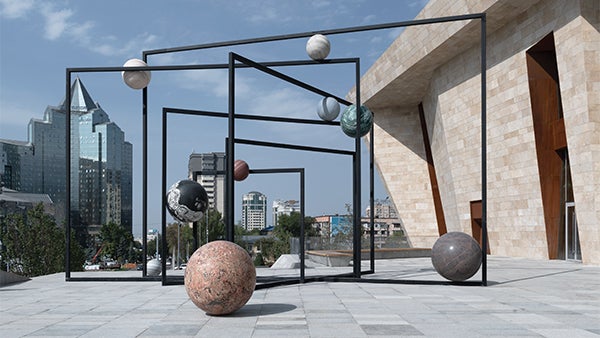
Across the border in Kazakhstan’s largest city, Almaty, home to international boutiques including Saks Fifth Avenue, things are also on the up. The Almaty Museum of Arts, the country’s first museum dedicated to contemporary art, opened in September 2025, offering visitors the chance to discover Almaty’s diverse art scene and rich culture.
Europe’s cultural capitals
Adopting the same tried-and-tested model used by luxury boutiques, prestigious galleries go where the money is. Cork Street in London’s Mayfair is a stone’s throw from Bond Street, the world’s most expensive retail destination, and the Royal Academy of Arts. After significant investment, it is attracting shoppers seeking art from far and wide to galleries including Alison Jacques and Tiwani Contemporary.
But ask any art dealer worth their salt, and they will tell you Paris is where it’s at. In addition to the impressive Fondation Louis Vuitton art space, which opened in the grounds of the Bois de Boulogne public park in 2014, last October saw the return of the Fondation Cartier. The latter serves as a home for the private art foundation and a dedicated space for contemporary art, housed in a former 19th-century department store, across the street from the Louvre.
And where better to spend an art holiday than Athens, a city that juxtaposes ancient history with an exciting contemporary art scene? In addition to seeking inspiration at the Museum of Cycladic Art and the Benaki Museum, today’s curious collectors are looking to edgier neighbourhoods for the next big thing. In the creative enclaves of Kypseli, Plateia Amerikis and Exarchia, art tourists have the chance to meet artists in person.
Among them is Anniek Verholt. Four years ago, the Dutch-born artist set up her studio in the Plateia Amerikis, a lively and culturally rich neighbourhood in the centre of the city. “Athens attracts artists from all over the world, and that mix creates a dynamic environment,” she says. “There’s a spirit of experimentation, a willingness to take risks and a sense that creativity is something collectively nourished. All of this creates a special experience that I don’t often encounter in the more established art cities such as London or Amsterdam.”
Belgium’s hidden gem
The affluent Belgian resort of Knokke-Heist is home to around 85 art galleries, the majority of which specialise in contemporary and modern art. Best known as a summer and weekend retreat, this relatively small seaside town attracts art aficionados from Antwerp, Ghent and Brussels, as well as an elite community of collectors and dealers, for its high concentration of white-cube galleries, luxury stores and Michelin-starred restaurants.
Today, family-run establishments such as De Brock Gallery, Boon Gallery and Edouard Simoens Gallery, all of which show at Brafa Art Fair at the end of January each year, are passing the baton to younger family members eager to make their mark.
“What defines this new wave of gallerists is a willingness to rethink how galleries engage with the public,” says Christophe Boon, director of Boon Gallery and vice president of Brafa. “We focus more on curated experiences, compelling storytelling around the artists and exhibitions that resonate with an international audience, while still honouring the region’s long-standing collecting tradition. Many of my neighbours in Knokke have embraced this shift; we collaborate more closely, organise simultaneous openings, invest in museum-quality presentations and are increasingly active on the global fair circuit.”
Thanks to this renewed energy, Knokke-Heist has evolved from a seasonal destination into a year-round contemporary hub. That Ostend-Bruges Airport is only 45 minutes away and frequently used by collectors arriving on private jets is another plus. Additionally, Knokke-Heist has its own heliport, providing ultra-convenient connections to major hubs such as Paris.
“What we are seeing among collectors mirrors what’s happening in the art world itself – a move away from fixed centres towards more personal, curiosity-driven journeys,” says Ben Stevenson, Global CEO, The Travel Division at Air Charter Service. “Clients aren’t just travelling to a single fair or opening but stitching together itineraries that reflect their interests. That could mean a biennale here, a private studio visit there, perhaps a sculpture park or a regional museum that isn’t on the usual circuit. Our role is to make those less obvious destinations as seamless and rewarding to reach as the traditional capitals.”
“One of the key advantages of private aviation is access to a much wider network of regional airports,” says Jessie Howes, ACS London’s Director of Private Jets. “Many of these airports aren’t served by scheduled flights and are often closer to the destination. Using smaller, efficient aircraft allows collectors to bypass congested hubs, reduce overall journey time and travel far more efficiently, whether for a private viewing or a tightly planned itinerary.”
The great outdoors
For those looking for the ultimate cultural escape, sculpture parks, galleries and arts organisations are cropping up in the most verdant of spaces. For instance, Inhotim in Brazil, Storm King Art Center in upstate New York and the commercial gallery Hauser & Wirth in Somerset, UK, prove world-class artistic experiences, often deeply integrated with landscape, can thrive outside city environments. Furthermore, audiences seeking a more personal engagement with art are willing to travel to new and surprising locations.
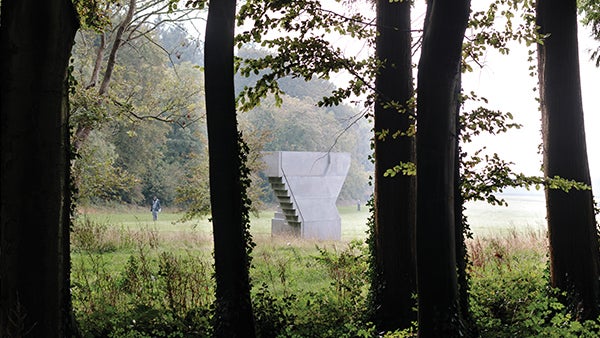
Set in the historic Goodwood Estate in West Sussex, the newly opened Goodwood Art Foundation fuses art, education and cultural experiences within 70 acres of ancient woodland, curated by landscape architect Dan Pearson and interspersed with works by Rachel Whiteread and Isamu Noguchi.
“We’re a not-for-profit art organisation, and the works on display are loaned from artists, collectors and institutions,” says foundation director Richard Grindy, who, together with curator Ann Gallagher, formerly from the Tate, is shaping a rich and engaging programme. Expect live performances and commissioned works of music, theatre and dance that respond specifically to Goodwood’s unique setting and collection.
“As more collectors, curators and cultural travellers embrace a broader and more exploratory approach to engaging with art, I expect initiatives like ours will become increasingly woven into the new global art map,” notes Grindy. “We’re already seeing this curiosity and momentum, and we welcome the opportunity to show international visitors just how vibrant and innovative the cultural landscape beyond London can be.”
Ben Stevenson at The Travel Division adds: “Cultural travel is becoming far more experiential, and we’re seeing growing demand for journeys taking people beyond cities. These trips often require a more considered approach, combining air access, ground logistics and timing around private events or seasonal programming. That kind of planning is now central to how many collectors engage with culture globally.”